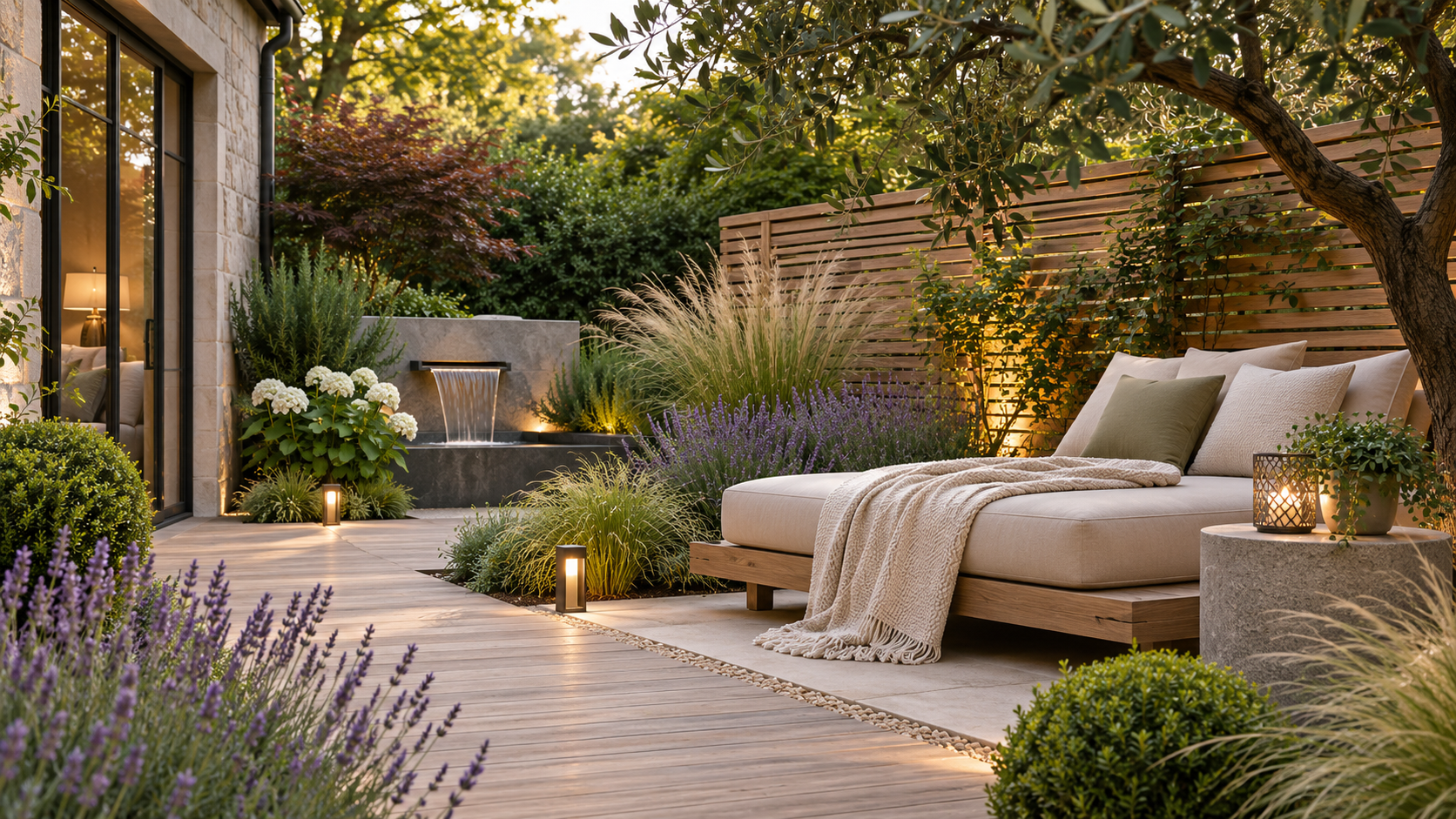
Creating a Private Outdoor Wellness Sanctuary in Your Garden
A private outdoor wellness sanctuary turns an overlooked corner of the garden into a place for quiet routines, from morning stretches to an evening soak. The most successful spaces feel sheltered without becoming enclosed and luxurious without demanding constant care. Start by observing where sunlight falls, which neighbouring windows overlook the garden and where traffic or household sounds are strongest. These details will guide the layout and help each design choice serve a practical purpose.
Elements of a Serene Spa Garden
Give the sanctuary a clear centre, such as a daybed, plunge pool or weatherproof lounge chair, then arrange other elements around it. A simple route from the house prevents wet or muddy feet, whilst slip-resistant stone, textured porcelain or timber decking creates a secure surface.
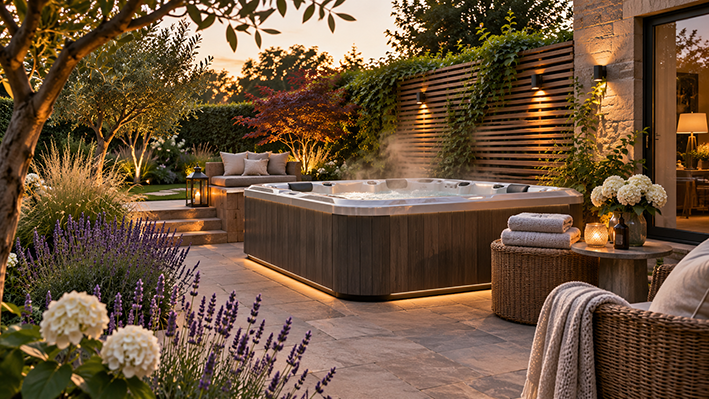
Limit the palette to three or four materials so the garden feels composed. Warm wood, pale stone and soft upholstery work particularly well together. Ideas drawn from spa-inspired home retreats can also translate outdoors through low lighting, natural textures and uncluttered storage. Add a lidded bench for towels and yoga equipment, keeping everyday items close without leaving them exposed to the weather.
Tactile Screens for Total Seclusion
Privacy should feel architectural, not heavy. Position screens where they interrupt specific sightlines, checking the view from seated and standing height before installation. A two-metre screen may work beside a lounger, while a shorter panel can define the entrance without blocking useful daylight. These details are equally important when creating a seamless connection between outdoor privacy and luxury home design.
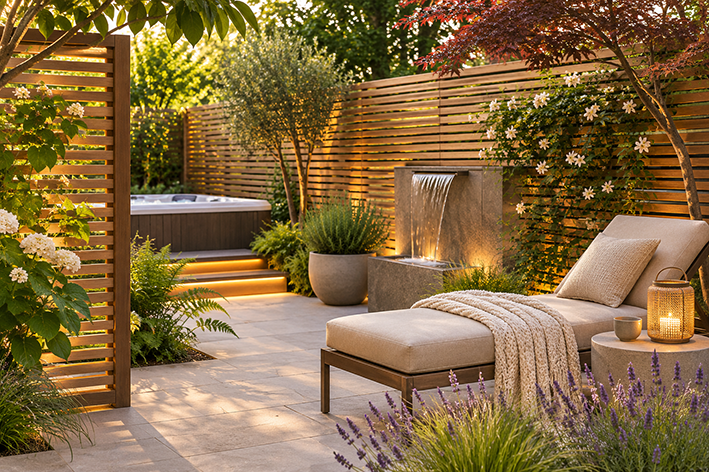
Timber slatted fencing brings warmth and rhythm to a wellness garden, with narrow gaps allowing light and air to move through. Run the slats horizontally to make a compact plot appear wider or vertically to emphasise height. Leave enough room around planting for maintenance and use a suitable exterior finish. A climbing plant on a separate support can soften the boundary while protecting the timber from trapped moisture.
Selecting Calming Water Features
Choose a water feature according to the sound you want to hear. A shallow rill creates a gentle flow, a wall-mounted sheet gives a clearer splash and a bubbling stone produces a quiet murmur suited to smaller gardens. Listen to a working model before buying, since water volume and drop height affect the sound far more than photographs suggest.
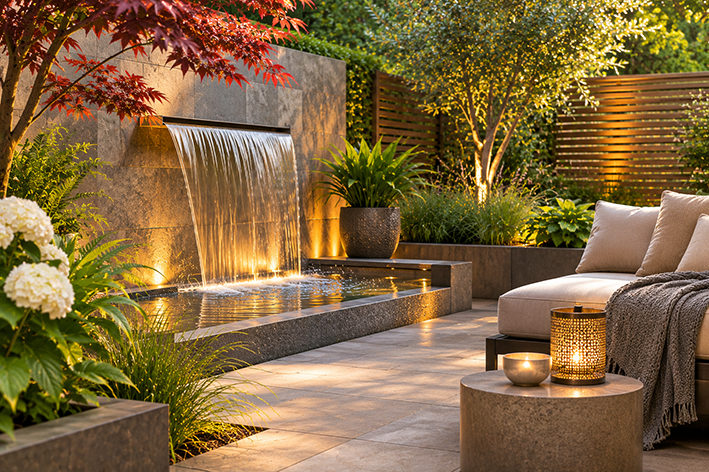
Place the feature near the main seat but away from bedroom windows and exposed dining areas. Restrained pools and stonework show how water can become part of the architecture. For easier upkeep, select an accessible pump, fit a removable filter and check the reservoir weekly during warm weather.
Planting for Multi-Sensory Calm
Build planting in layers, using taller evergreens for year-round screening, medium shrubs for structure and softer perennials near paths and seats. Repeating a few varieties creates a calmer effect than filling every gap with a different plant. In a typical border, groups of three or five often look natural and remain easy to maintain.
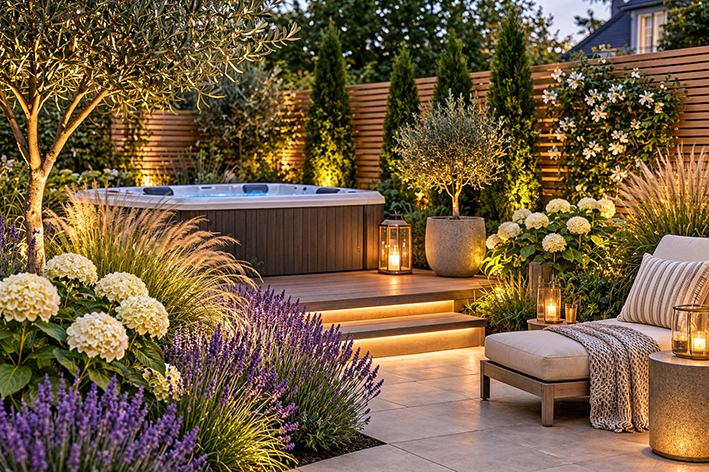
Fragrance works best in small doses. Lavender beside a sunny path releases scent when brushed, while jasmine near a seating area perfumes warm evenings. Ornamental grasses add movement and a gentle rustle, and plants with woolly or ridged leaves bring a tactile detail at arm’s reach. Check mature sizes before planting so paths stay open and damp foliage doesn’t crowd cushions or decking.
Once the main structure is in place, let the sanctuary settle before adding accessories. A month of regular use will reveal where you naturally put a drink, need a towel hook or want softer lighting. Those small, observed adjustments are what make the garden feel genuinely private and personal.