
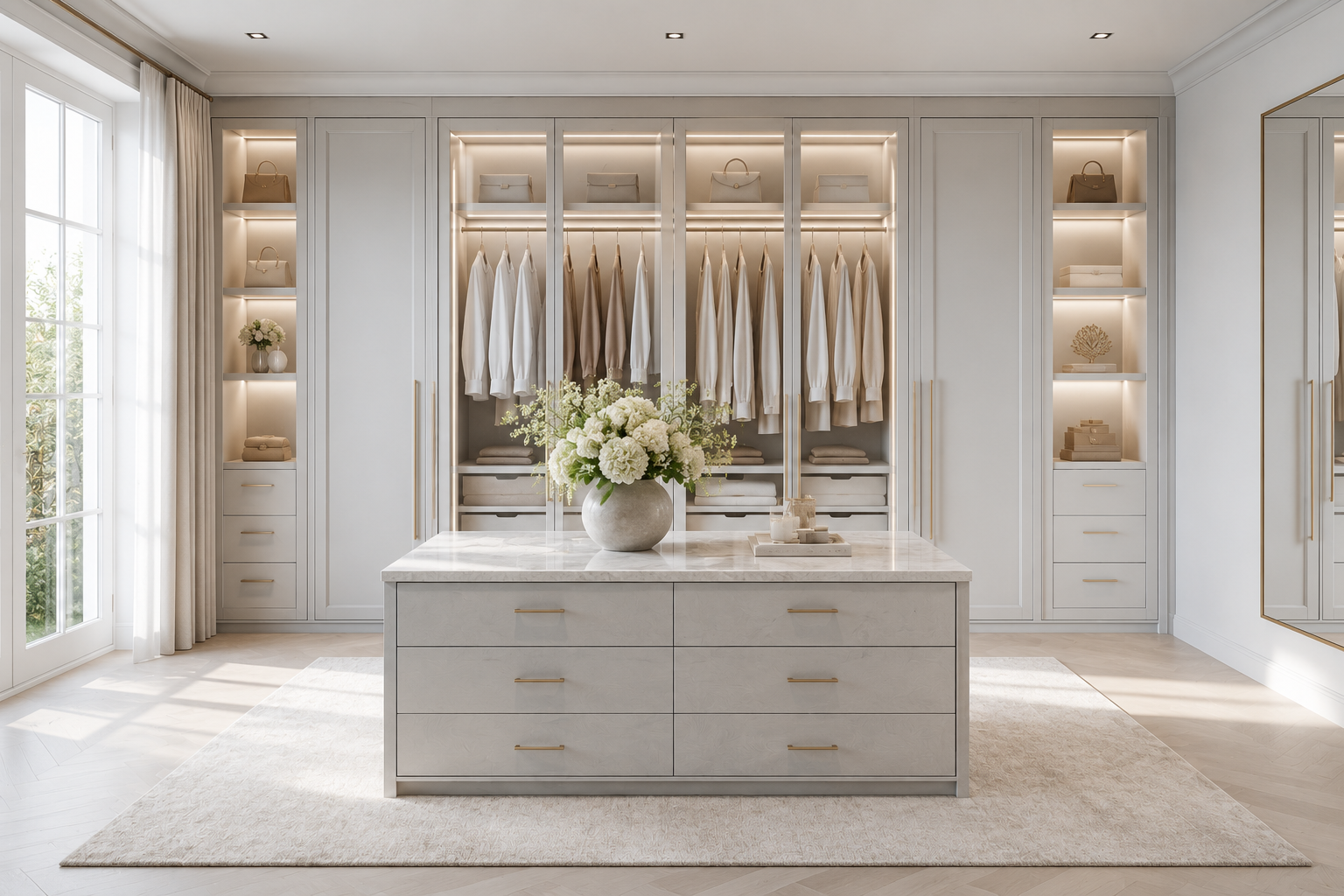
Luxury Fitted Wardrobes: Bespoke Storage That Elevates Interior Design
The best wardrobes do not simply sit in a room. They belong to it.
A luxury fitted wardrobe should feel as though it was considered at the same moment as the walls, windows and lighting. It should reflect the proportions of the space, complement the wider interior scheme and make daily routines feel smoother.
For interior designers, this is where bespoke storage becomes especially valuable: it offers the freedom to create something practical without compromising the character of the room.
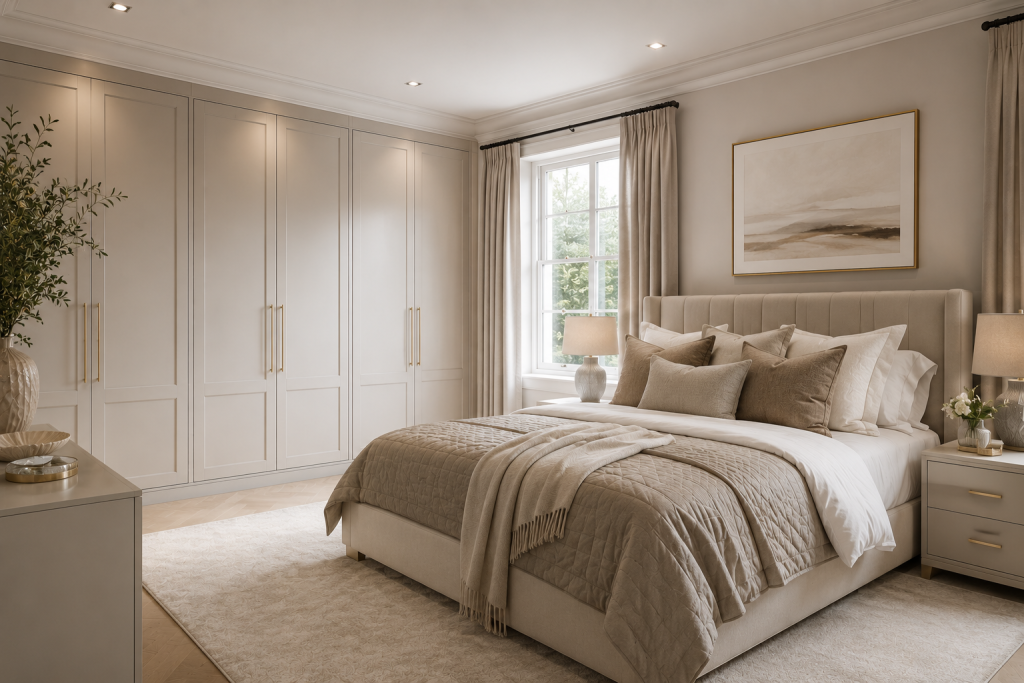
Unlike freestanding furniture, a fitted wardrobe is designed around the architecture. Awkward corners, sloping ceilings, alcoves and uneven walls can all become part of the solution. Floor-to-ceiling cabinetry makes full use of the available height, while wall-to-wall designs create a calm, continuous finish.
This tailored approach is particularly effective in bedrooms where space is limited. Every centimetre can be planned with purpose. In larger dressing rooms, the same level of precision allows for generous layouts, balanced elevations and elegant symmetry.
The exterior sets the tone
A wardrobe can be almost invisible, with flush doors painted to match the walls, or it can become a defining feature through timber veneers, ribbed glass, metal detailing or upholstered panels. The right choice depends on the interior story.
In a contemporary bedroom, clean lines and handleless doors may create the quiet simplicity the scheme requires. In a period property, framed cabinetry, decorative mouldings and traditional hardware can connect the wardrobe to the building’s original character. There is no single formula for luxury. It may be expressed through restraint, craftsmanship, texture or a carefully unexpected detail.
What matters is that the wardrobe feels intentional.
Inside, the design becomes more personal. A truly bespoke wardrobe should respond to the client’s habits rather than forcing them into a standard arrangement. Someone with an extensive shoe collection will need a different layout from a client who owns long dresses, tailored suits or luxury accessories.
Hanging rails can be positioned at different heights. Drawers can be divided for jewellery, watches and smaller items. Shelves can be adjusted for knitwear, handbags or luggage. Pull-out shoe racks, valet rails, concealed laundry storage and full-length mirrors can all be included where they add genuine value.
Even the smallest details can transform the experience. Soft-lined drawers protect delicate possessions. Integrated charging points keep technology discreetly organised. Interior lighting, activated when the doors open, improves visibility and creates a subtle sense of theatre.
These features should never feel added for effect. The most successful wardrobe interiors are those in which everything has a clear purpose.
Craftsmanship is equally important. Luxury is often visible in the quiet details: consistent gaps between doors, matched timber grain, smooth drawer movement and hardware that feels substantial in the hand. These elements may not demand attention, but they shape the way the furniture is experienced every day.
A well-made wardrobe should open effortlessly, close quietly and continue to perform beautifully over time. This is why collaboration between interior designer, joinery specialist and installer is so important. Technical decisions made early in the process can protect the design concept and prevent compromise later.
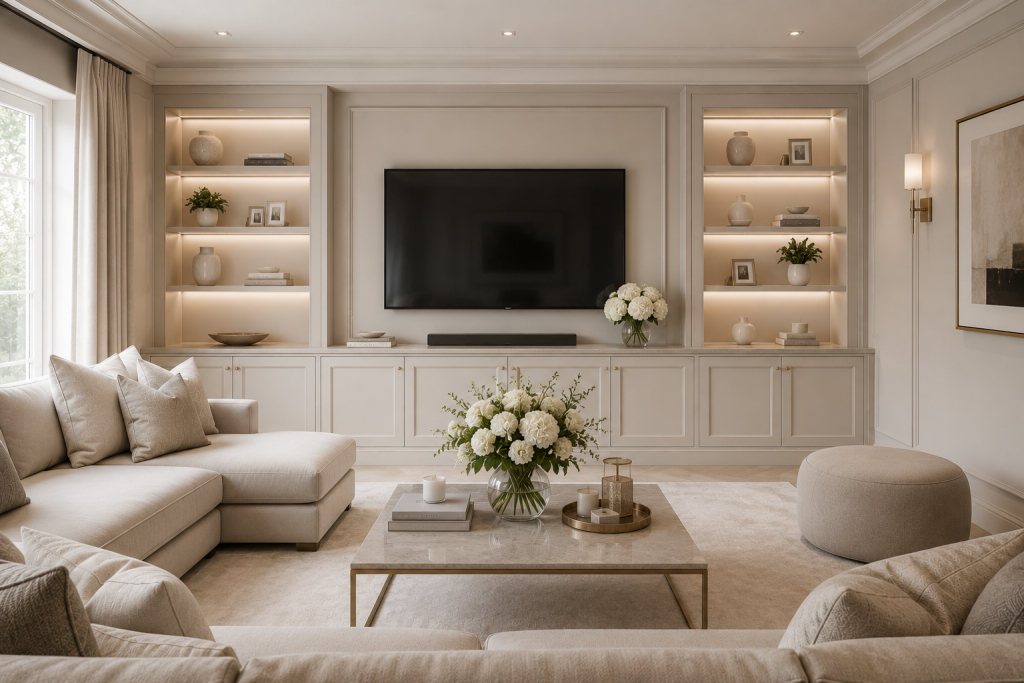
Material selection also offers an opportunity to add depth to the scheme. Natural oak or walnut can introduce warmth, while lacquered finishes create a more polished, architectural appearance. Tinted mirrors, antique brass, textured fabrics and smoked glass can add contrast without overwhelming the room.
Often, the most memorable designs reveal something unexpected. A restrained exterior may open to a richly detailed interior, with dark timber, soft lighting and beautifully lined compartments. This contrast creates a private sense of luxury that belongs entirely to the client.
A bespoke fitted wardrobe is ultimately about more than storage. It brings order to the room, supports the client’s lifestyle and strengthens the overall design.
When architecture, materials and craftsmanship are brought together with care, the result feels effortless. Not simply a wardrobe, but a permanent and beautifully resolved part of the interior.


One Response