
As skincare continues to dominate the global beauty market, between 10-20% of the global population is estimated to have suffered from skin reactions due to harmful or allergenic ingredients in cosmetic products.
Often, the reaction turns into contact dermatitis which is an itchy rash caused by direct contact with a substance, but it can also cause other issues such as hormonal disruption, and in some cases, cancer.
Skincare has become a must-have for millions across the globe, with high-end brands releasing new products, skincare routines being shared online, and around 674,000 searches in the past month alone across the UK, it is vital consumers and beauty enthusiasts are able to recognise ingredients that can cause more harm than good.
Dermatology experts at The Devonshire Clinic are sounding the alarm on common ingredients hidden in everyday products that may be silently damaging the skin’s natural barrier.

“With skin sensitivities on the rise, it’s crucial for consumers to understand what’s in their skincare,” said Dr Conal Perrett, consultant dermatologist at The Devonshire Clinic. “By eliminating harsh ingredients and choosing scientifically proven alternatives, we can protect the skin’s barrier, reduce irritation, and promote long-term skin health.”
Dr. Perrett’s list of the most harmful skincare ingredients
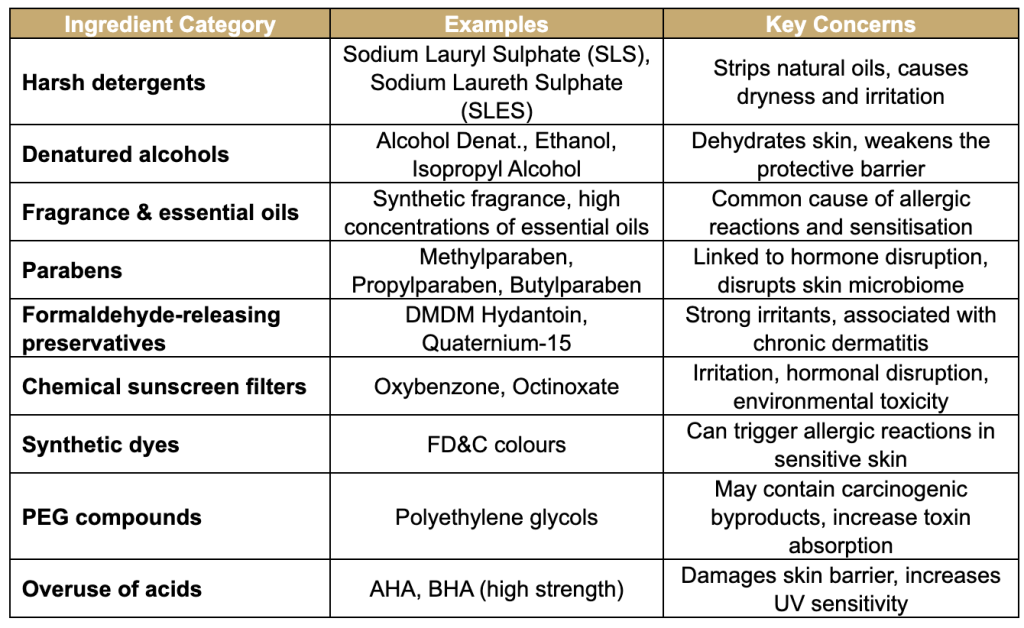
Dr Perrett continued: “Many people aren’t aware that everyday skincare products can gradually weaken the skin’s natural barrier, leading to irritation, redness, and long-term sensitivity. The issue isn’t just about one ingredient or another, it’s the cumulative effect of repeated exposure to harsh detergents, synthetic fragrances, and alcohol-based formulas that strip and stress the skin over time.
“A compromised skin barrier doesn’t just make the skin feel tight or dry, it can increase susceptibility to allergic reactions, infections, and chronic inflammation. That’s why it’s so important to understand how ingredients interact with your skin, and to choose products that support rather than undermine its natural defences.

“For anyone experiencing a reaction, it’s crucial to pause the product, simplify routines, and focus on gentle, supportive care while the skin recovers. Over time, protecting the skin’s barrier not only reduces immediate irritation but also strengthens long-term skin health, keeping it resilient, hydrated, and balanced.”
Following Dr Perrett’s advice, there are practical steps consumers can take to protect their skin and minimise irritation. These expert-backed tips provide a clear roadmap for safer, healthier skincare.
Dermatologist tips for safer skincare:
Check ingredient labels: avoid products with sulphates, parabens, and denatured alcohols.
Patch test new products: apply a small amount to the inner arm and wait 48 hours before full use.
Opt for fragrance-free formulas: especially if you have sensitive or allergy-prone skin.
Look for barrier-boosting ingredients: such as ceramides, niacinamide, glycerine, and squalane.
Don’t overexfoliate: limit acids to a few times a week to avoid barrier damage.
Choose mineral sunscreens: zinc oxide and titanium dioxide are gentler alternatives to chemical filters.
Simplify your routine: fewer products often mean less risk of irritation.