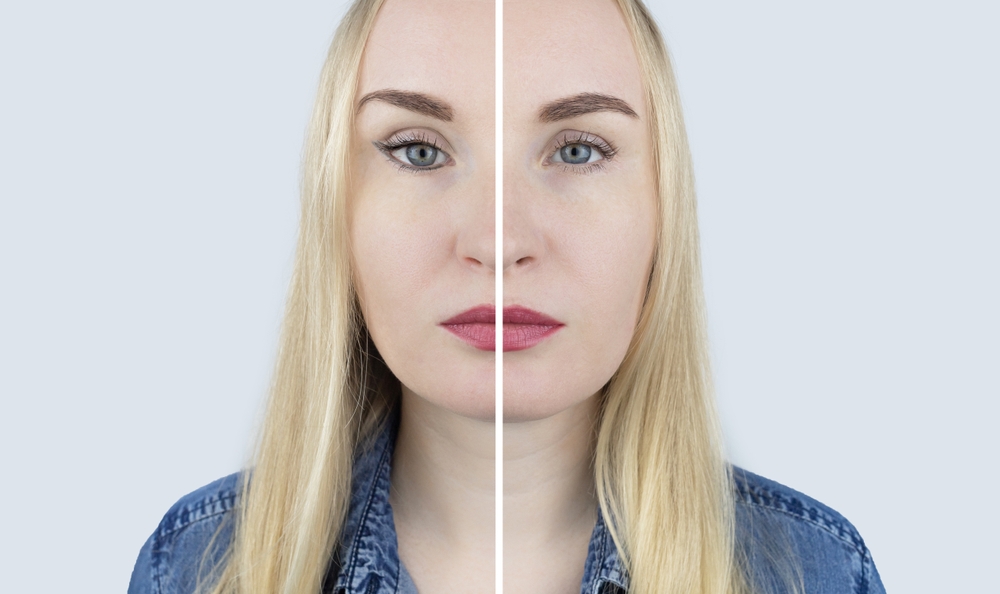
The Temporal Lift Guide: Achieving the Coveted “Fox Eyes” Look
Ever looked at a photo of yourself from a high-profile gala or an intense board meeting and thought, when did my eyes start looking so incredibly tired? It is not even about wrinkles. Not really. It is that subtle, heavy lateral descent of the brow line that makes you look perpetually exhausted, even after a pristine two-week retreat in the Maldives.
For the modern woman whose calendar is booked months in advance, traditional facial surgery sounds like an absolute nightmare. A month of hiding away? Not happening. Absolutely out of the question. Yet, the temporary magic of thread lifts and aggressive periocular filler placement is quickly losing its charm – they just don’t last, and honestly, the lymphatic edema they cause under flashing cameras is a bit of a disaster. Enter the discreet world of the endoscopic temporal lift – the actual, medical reality behind that effortlessly lifted, “Fox Eyes” aesthetic.
The Deep Plane Geography of the Lift
Here is the thing about high-end aesthetic surgery today: if people can tell you had something done, it is an absolute failure. The goal is “did she just have a spectacular night of sleep?” rather than “who is her surgeon?”
The magic of this specific procedure lies in its surgical anatomy. Instead of manipulating the superficial skin, a skilled surgeon targets the deep structural layers through microscopic incisions placed entirely within the hair-bearing scalp of the temple.
No scars on the face. None. Through these tiny openings, the deep temporal fascia is accessed, allowing the surgeon to mobilize and reposition the lateral brow and the outer canthus – the corner of the eye where upper and lower eyelids meet. Today, advanced foxy eyes lifting techniques allow European-based plastic surgeons like Dr. Zykov to elegantly open up the gaze, lift the tail of the brow, and smooth those stubborn crow’s feet in one swift move.
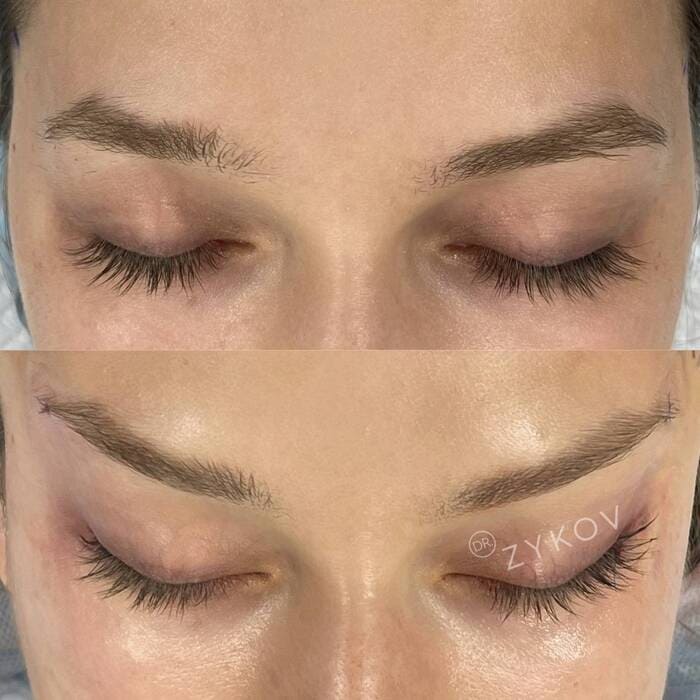
By Dr.Zykov: “Fox eyes” before and after – the result immediately in the operating room
And by the way, did you know that the temporal lift was originally developed to fix severe facial asymmetry and nerve paresis? Funny how a corrective medical technique turned into the most coveted supermodel beauty trend of the decade. Anyway, because the structural fixation happens deep beneath the muscle layers rather than on the skin surface, the anatomical shift stays beautifully intact for five to six years. Not five months. Five whole years of never having to over-arch your brows with makeup or struggle with sagging tissue.
Who Is a Good Candidate for a Temporal Lift?
A temporal lift may be suitable for patients who experience:
- mild to moderate descent of the outer brow;
- a tired or heavy appearance around the eyes;
- loss of definition in the lateral eyebrow;
- mild asymmetry of the brow region;
- early signs of aging around the upper face;
- dissatisfaction with the short-term effects of threads or injectables.
Patients seeking correction of significant forehead laxity, severe eyelid skin excess, or advanced facial aging may require additional procedures such as blepharoplasty or a facelift to achieve optimal results.
A consultation with a qualified plastic surgeon is the best way to determine whether a temporal lift is appropriate for your specific anatomy and aesthetic goals.
The 7-Day Recovery Timeline: What to Expect
One of the most common concerns patients have is recovery time. Fortunately, modern endoscopic techniques have significantly reduced downtime compared with older surgical approaches.
The procedure itself typically takes around one hour and is often performed under local anesthesia combined with intravenous sedation. Most patients return home the same day.
Days 1–3
Patients usually experience mild swelling, tightness, and tenderness around the temple region. Cold compresses and prescribed aftercare measures are generally sufficient to manage discomfort.
Bruising is typically limited and can often be concealed with hair styling or accessories.
Days 4–5
Swelling begins to decrease, and most patients feel comfortable participating in video calls and routine daily activities.
At this stage, the face may already appear more rested and refreshed, although healing is still ongoing.
Days 7–10
Sutures are usually removed within one week. Most visible signs of surgery have largely resolved, allowing patients to return to social events, travel, and professional commitments.
Final results continue to develop over the following weeks as residual swelling subsides.
A Masterclass in Tissue Longevity
Investing in your appearance should feel like investing in fine art or prime real estate. You want longevity, predictability, and an undeniable return on confidence. While non-surgical alternatives like PDO threads are constantly marketed on social media, medical consensus published in the National Center for Biotechnology Information warns that they often snap, misalign, or sag within months, leaving behind internal micro-scarring that actually makes future treatments significantly harder.

A surgical temporal lift is a completely different league. It repositions the actual deep tissue structures and secures them to the bone cortex or deep fascia. It is stable. It is anatomically sound. It is the definitive answer for the woman who demands perfection but simply lacks the time to sit through endless monthly clinic touch-ups.
At the end of the day, looking refreshed shouldn’t require sacrificing your active lifestyle or your privacy. If a discrete, one-hour outpatient procedure performed by an international expert can effortlessly erase half a decade of fatigue from your face, why are we still wasting time pretending that expensive eye creams can do the same?
Luxury Life Magazine – the luxury lifestyle magazine for discerning readers around the world.