Why You Shouldn’t Skip This Essential BBQ Prep Step, According to Experts
With spring and the warmer weather comes barbecue season for Brits, and whilst they might seem like a casual affair, these events can take plenty of planning and preparation. From setting the tone with music to ensuring you have an indoor contingency plan, there’s a lot to think about.
The key element, however, is the food and Brits are infamously divided on which foods belong at a barbecue. Almost nine in ten (88%) agree that burgers are a key staple of a British barbecue, along with sausages (85%), chicken skewers (77%) and corn on the cob (62%), according to a recent study by appliances retailer AEG¹.
More outlandish choices for a barbecue include grilled pineapple (only listed by one in six) and prawn skewers (favoured by a quarter of Brits), and when it comes to sides, people are relatively divided on both couscous and rice as barbecue accompaniments whilst salad, coleslaw and potato salad were crowned the UK’s favourites.
Whatever your menu of choice, cooking on a grill proves to be trickier than your typical oven or hob. More than two-thirds (67%) of us worry about food being cooked properly when grilling on a barbecue. Food safety is paramount, and there’s a lot to consider in terms of preparation when cooking meats in particular.
AEG has enlisted the help of nutrition expert Kevin Rail, to offer tips on how to prep for your barbeque safely and how to keep your food at a safe temperature, to ensure you’re dishing up something tasty for your guests.
When it comes to prepping for a barbecue, there are some food safety issues to consider, especially when it comes to handling meats. Kevin explains:
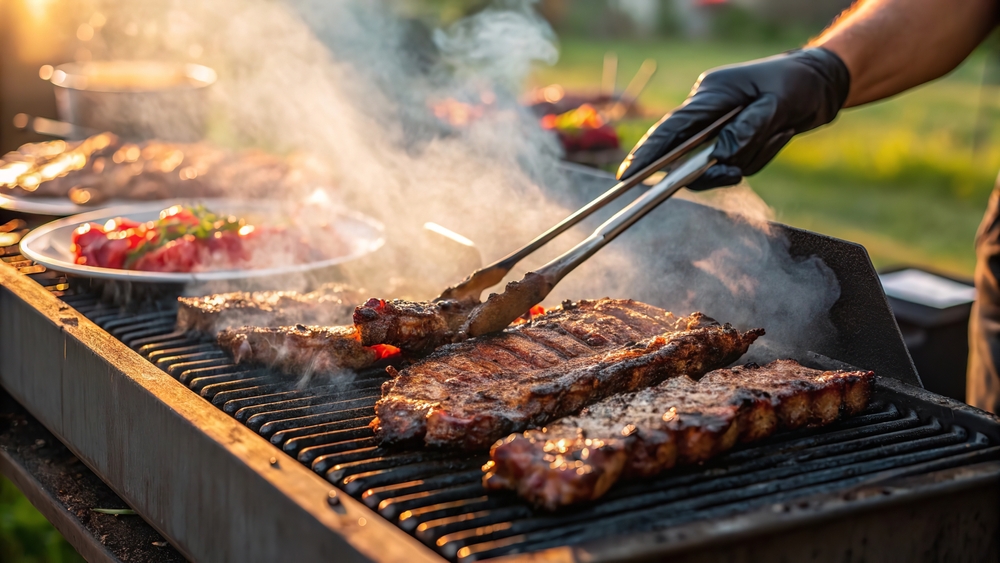
“Don’t take meat out of the fridge until you’re ready to cook. Leaving raw meat on the counter for too long puts it right in the bacterial growth zone, which is between 4°C and 60°C. Keep it chilled until it’s go-time. If you’re marinating, do it in the fridge, not on the counter. And use a separate container for basting sauce… never dip a brush back into raw marinade.”
Whilst almost two-thirds (65%) of people wouldn’t think to do it, pre-cooking your meats in the oven before grilling them is a safe and easy way to ensure your guests have the best food experience.
“Some meats actually benefit from a little pre-cooking in the oven. Chicken legs, thighs, and drumsticks are prime examples. They take a while to cook through, and nobody wants a beautifully charred outside with a pink centre. Give them a head start in an oven preheated to 180C, then finish them on the grill for that crispy, smoky finish. Ribs are another great example. A low and slow bake in the oven makes them tender, so they’re ready for a quick caramelisation over the flames.”
If you’re worried about food being undercooked and don’t want to ruin your guests’ burgers by cutting them up, a food probe is a great tool to have in your kitchen.
“When it comes to checking if your food is fully cooked, a meat thermometer is your best friend. For chicken, you’re looking for a minimum of 74°C at the thickest part. For burgers, aim for 71°C if you’re using ground beef, which carries a higher risk of bacteria because it’s been processed. Pork should hit 63°C, and steaks can be adjusted to preference, but I still recommend at least 57°C for medium-rare. Don’t just trust colour, smoked meats, in particular, can look pink even when they’re fully cooked.”
After cooking, there’s another round of safety to consider. Whilst your guests might still be grazing for a while after eating, leaving meat out can be dangerous.
“Food shouldn’t be left out for more than two hours, and if it’s a hot day, make that one hour. Bacteria can multiply fast. If you’re serving buffet style, keep hot foods warm in a covered dish or on the warm side of the grill. For cold items like coleslaw or potato salad, use a cooler with ice packs or nest the serving bowl in a larger bowl of ice.”
Whether you’re a seasoned grill master or a first-time host, taking the time to prep properly can make all the difference, not just for flavour, but for safety too. By following expert advice and using the right tools, you can enjoy a stress-free barbecue that keeps everyone well-fed and safe.
For more cooking inspiration or to shop appliances, visit the AEG website.
Luxury Kitchen Gardens: The Best Vegetables to Grow in Stylish Pots