What is a Japanese food best served in the winter? A warm bowl of udon should be on the list of every Japanese cuisine lover’s list.
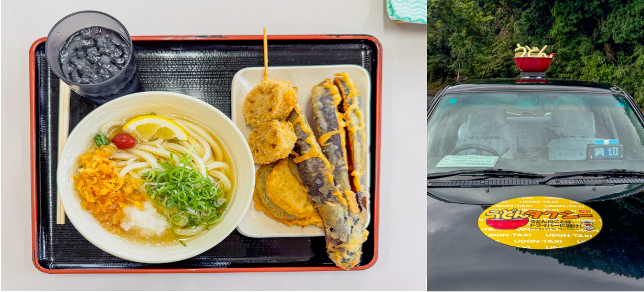
In the Takamatsu area and Kagawa Prefecture in Setouchi, travellers can go on a udon-tasting journey on the Udon Taxi, a unique cab tour where local drivers take tourists to famous udon restaurants and hidden gems not listed in guidebooks.
Full-time Udon Taxi drivers who have passed a test can explain in detail the history and culture of udon in Japan, as well as the best way to order it in stores. The service is available mainly in the western part of Kagawa prefecture, including Sakaide, Marugame, Zentsuji, and Kotohira.
Visitors can book 60, 90, 120 or 180-minute experiences, visiting between 1 and 3 udon restaurants. Prices start from 5,400 yen (£27.90) for 60 minutes, 8,100 yen (£42) for 90 minutes, 10,800 yen (£55.75) for 120 minutes and 16,200 yen (£83.65) for 180 minutes.
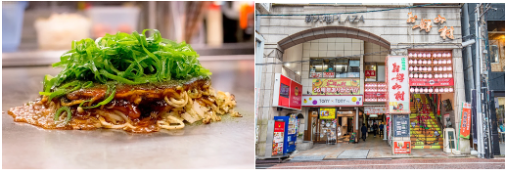
Build your own okonomiyaki pancake at Okonomimura in Hiroshima
Located in the heart of Hiroshima’s Naka-ku district, Okonomimura is a multi-storey ‘okonomiyaki village’ that’s home to 23 different restaurants, each offering its own take on this beloved dish.
Okonomiyaki, a savoury pancake, is usually made with cabbage, meat, seafood, and noodles. It is a local speciality born in the aftermath of World War II. Its history can be traced back to the food stalls in Shintenchi Square, a plaza not far from the hypocentre of the atomic bomb, which helped revive the community post-war. Today, the area’s transformation into a high-rise building allows travellers to experience this nostalgic dish, while enjoying the vibrant atmosphere of Hiroshima’s food culture.
A visit to Hiroshima is not complete without a visit to the Peace Memorial Museum, seeing the shrines on Miyajima island and trying the infamous oysters – the area accounts for 60% of Japan’s oyster production – but trying okonomiyaki at Okonomimura is a must.
Okonomiyaki Village opening hours vary from store to store, so please check the Okonomimura website in advance.
Three Gastronomical Places to Stay in Takamatsu
The newly restored Anabukitei offers a private rental that combines modern comfort with traditional Japanese architecture. Built in 1970, this luxury mansion welcomes just one group of guests per day to enjoy its beautiful Japanese garden, private open-air bath, sauna, and breakfast and optional dinner featuring local Japanese flavors.
Auberge de Oishi is an intimate 5-room Mediterranean-style hotel located at the foot of Mt. Yashima, overlooking the Seto Inland Sea. It features a ‘hidden Setouchi restaurant’ that highlights local ingredients from the region, including unique offerings like Sanuki olives.
Hanajukai, or ‘Hana no Yado’ (Flower Inn), centers around a revived hot spring and boasts a large bath with stunning views of the Seto Inland Sea and Takamatsu City skyline. Guests enjoy exquisite Sanuki cuisine crafted from fresh, local ingredients, blending Japanese traditions with international flavors. Prices start at 380,000 yen for a single occupancy room, including consumption tax and breakfast, as of October 2025.
Discover LOG: A boutique hotel in Onomichi, where gourmet cuisine meets serene design
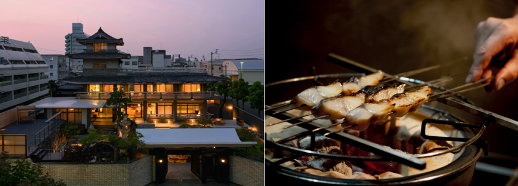
Onomichi is home to LOG, a charming boutique hotel that beautifully blends architectural heritage with modern style. Opened in 2018 after transforming an apartment building, LOG was brought to life in collaboration with the Indian architectural collective STUDIO MUMBAI. It’s located near the famous Senkoji Temple and offers a unique dining experience that mixes traditional Japanese flavors with European and Asian influences.
The hotel offers a menu crafted by the talented food creative, Ms. Ai Hosokawa, who focuses on clean, nourishing flavours that highlight high-quality ingredients, with inspiration from her training in Italy. The restaurant’s vibe matches the hotel’s aesthetic, with rooms wrapped in stretched Japanese paper that creates a cocoon-like cosy feel.
Prices start at 34,100 yen for a 4-bed room, including consumption tax, as of October 2025.
EXTRA: Sprinkle your foodie getaway with culture from traditional soy sauce brewery to the island of lemons
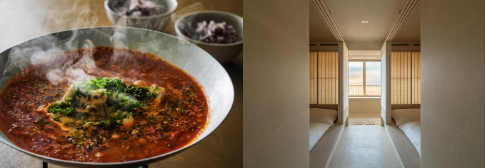
For more foodie excursions, pair these up with activities in this other 4-Day Setouchi Journeysitinerary, where you can arrange a visit to a moromi soy sauce brewing house that also doubles as a Registered Tangible Cultural Property. 25% of all traditional soy sauce producers are based on one of the islands connected to Shodoshima by the Angel Road that connects Japan’s three art islands.
The brewery is open for tastings and FREE walk-in tours. Free 15-minute tours of Yamaroku Soy Sauce are available Mon-Sun, 9am-5pm.
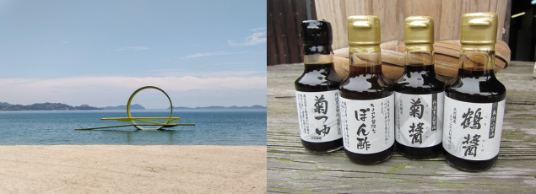
Dessert lovers can venture off to Ikuchijima and neighbouring Takanejima, where mild climate makes them Japan’s top domestic producer of lemons with around 600 orchards covering the hilly slopes. Best known for producing delicious specialties including Setoda lemon & Hakata salt gelato and Setoda lemon cake. These islands also form part of the free-to-visit Island-Wide Art Museum, a collection of 17 open-air sculptures dotted around Setoda Town that are best discovered by bike or e-bike.