Autumn and harvest time with all its seasonal promise will soon be upon us, but so too will be the usual range of sniffles and colds.
It’s the ideal time to think about our immune systems and building them up to be as resilient as possible.
But that doesn’t just mean eating well and doing exercise, it’s all about feeding your gut microbiome too. Why? Because our gut microbiome is a hidden inner resource that we all possess to build a robust immune system.
According to Award-winning nutritionist and gut health expert, Dr Lucy Williamson: “Two thirds of our immune system sit within the walls of our gut. All 100 trillion of our beautiful gut microbes have a vital role in regulating it, helping it to understand what it should and shouldn’t react to.

“So, nurturing our gut health is a fabulous way to strengthen our immunity especially when we’re more vulnerable when heading into Winter. At this time of year, we don’t get so much Vitamin D from that glorious summer sun. We need at least 10 minutes of direct sunshine on our skin; no clouds, no sunscreen, no coverings…so it’s easy to see why we’re all a bit low in Vitamin D in the UK. We can make up for this by enjoying fish twice weekly – there’s no other food that gives us as much of the sunshine vitamin. Or take a 10 or 25 mcg supplement daily.”
But what are the small, everyday changes that are easy wins when it comes to nurturing our precious gut microbiome? Here Lucy gives some tips:
- Daunted by getting your 30 different plants each week? Remember ‘plants’ includes spices, herbs, nuts, seeds, pulses, beans, cereals, grains, fruit and veg! So not so tricky after all!
- Probiotics doesn’t have to mean supplements – there are many everyday foods which contain natural probiotics – they’re naturally fermented – live yogurt, cheese and sourdough (bread as bread should be) are all great choices. Then there are some which you may not have tried – Kefir for example, an ancient, fermented milk drink bursting with live cultures. Even better, we know that the dairy food around Kefir’s live microbes helps to protect them as they go through our digestive system making sure they reach our colon, (our large intestine) – the home of our gut bacteria! Try going a bit spicier with Kimchi or why not try making your own vegetable ferment at home – it’s a great way to reduce food waste too (see recipe below).
- You can even help your gut health while you’re sleeping! Research shows us that fasting for at least 12 hours each day is very good for our guts. Finishing your last meal by 8pm and avoiding tucking into breakfast too early is a simple way to achieve this. You may think you’re hungry first thing in the morning, but have you tried hydrating well instead? You may discover you’re more alert if you hydrate first and swap your morning snack for a later breakfast – your gut health, your immunity (and possibly your to do list) will thank you for it!
- It’s easy to fall into the trap of restricting our food choices when following a plant-based diet but it doesn’t have to be this way! Eating plant-based to nurture our gut health just means filling two thirds of our plate with plants. Good quality animal sources of protein are fine for happy guts too; think less but better meat, sustainably sourced fish, eggs and dairy; just choose organic if you would also like to do your bit for the planet.
These delicious recipes are a great way to keep healthy and care for your gut health and support your immune system at the same time:
Homemade Ferment
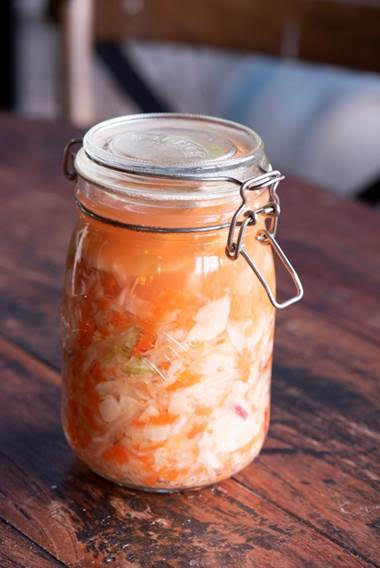
Makes 1 litre
Prep time:
Cooking time:
You will need:
1l glass kilner jar
1 large ceramic or glass bowl
Sharp knife
Ingredients:
NB: If you can, use organic fruit and veg for best results.
- 500g white cabbage & 500g carrots
- 1 red skinned apple.
- 2 cm piece of root ginger
- 2 tbsps sea salt
Method:
- Sterilise your jar – wash out well with hot, soapy water and put in an oven heated to 140 Degrees C for at least 10 minutes. Allow to cool completely before using. Ensure all other equipment is very clean. Remove jewellery.
- Thinly slice the cabbage, apple and carrots – I use a spiraliser for the carrot, but you could grate it too. Mix together in your large bowl with the salt. Press down well to release as much liquid as possible – this takes about 15 minutes working the salt into the veg, pressing as you go. You’re aiming for your shredded veg to be limp and easy to squeeze out its water. Add in the thinly sliced ginger.
- Transfer to the glass jar, a little at a time, pressing each addition into the jar so that its water keeps it submerged. Once all the veg is in the jar, ensure it is fully submerged under the liquid – you can use a piece of cabbage stalk to fill any space left between the veg mix and the lid so that once closed, this keeps the veg submerged.
- Leave to ferment at room temperature (out of direct sunlight) for 1-4 weeks. Once opened, store in the fridge and enjoy within 4 weeks if it lasts this long!
- Serve as a side with salads, a quinoa lunch bowl or with cheese and crackers.
Easy Sharing Sodabread
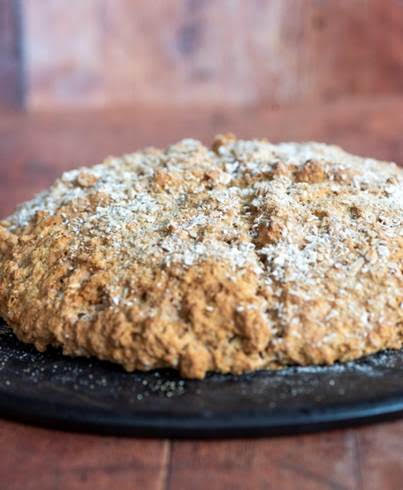
Sodabread is one of my favourite ones to make – so quick, no rising time, no added yeast and you can easily swap in gluten free flour & oats. The addition of oats makes it fabulously gut healthy too!
Set your oven to 180 (fan)
For 1 large loaf:
INGREDIENTS:
- 250g self-raising flour
- 250g wholemeal flour
- 80g oats or oatmeal
- 250ml whole milk or half milk/ half kefir
- 150ml water
- juice of half a lemon
- 2 tsp Salt
- 1 tsp brown sugar
- 1 tsp bicarbonate of soda
- Olive oil to brush over your loaf
METHOD:
- Mix together the dry ingredients in a large bowl
- Mx the milk, water and lemon juice in a jug and whisk together
- Pour this mix into the dry ingredients gradually and bring the mix together as a wet dough
- Tip the dough onto a lined baking tray or pizza stone and form into a disc shape about 20 cms diameter. Make a cross on the top with a sharp knife and brush with oil. Finally, sprinkle over some oats or oatmeal
- Leave the dough to rest for 10 minutes then place in the centre of your oven and bake for about 30 minutes or until it’s golden and sounds hollow when tapped.
- I like to lightly score the loaf into12 pieces then break each piece off to share.
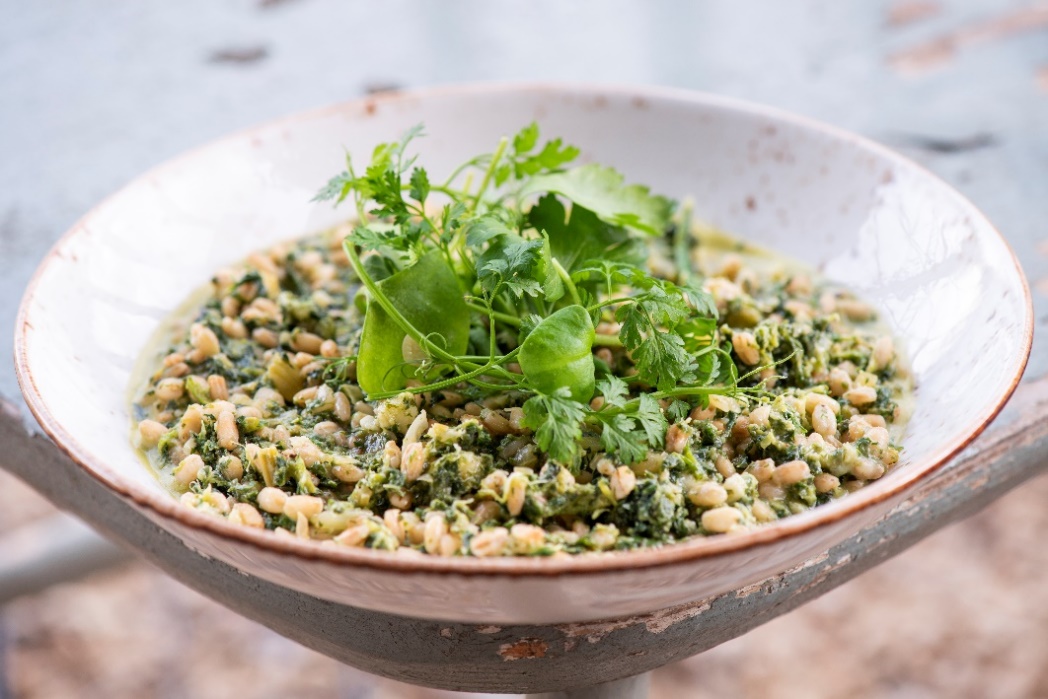
Pearl Barley Seasonal Risotto
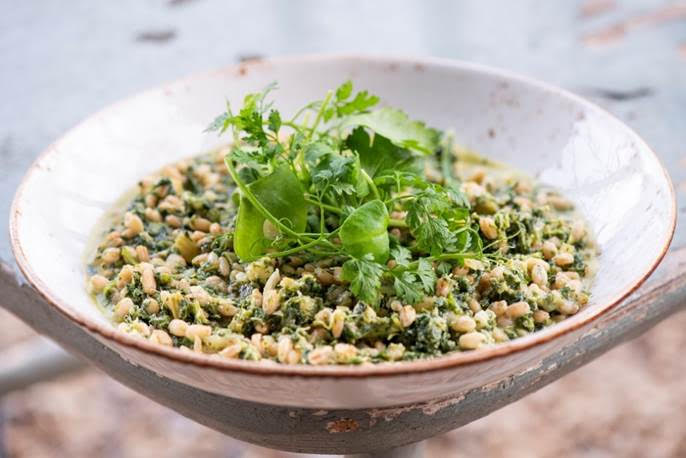
Risotto is a great base recipe – you can use other seasonal veg or add toppers like goats cheese or chicken pieces, but this simple recipe is tasty alone too!
Serves 2
Prep time:
Cooking time:
Ingredients:
- 200g pearl barley
- 1 onion, finely chopped
- 3 garlic cloves, crushed
- 50g butter
- 1 Tbsp of cold pressed rapeseed oil
- 2 celery sticks, finely chopped
- 150ml white wine
- 500ml good quality chicken or vegetable stock
- 1 lemon, zest and juice
- 100g grated parmesan cheese
- Salt and pepper
Seasonal Vegetables:
- 160g watercress and spinach (or just watercress)
- 400g asparagus, washed and chopped into 3cm lengths
- 120g frozen peas
- Good handful of summer herbs: chives, dill, flat leaf parsley and mint- finely chopped
Method:
- Place a non-stick pan over a low heat, add 25g butter and rapeseed oil. Add the finely chopped onion and cook gently for 5-10 minutes until translucent (but not coloured), then add the garlic and celery, cook for a further 5 minutes.
- Add the pearl barley and stir well to ensure it is coated in the butter/oil.
- Keeping the heat on medium, start adding in the stock, stirring frequently. Wait for the majority of the liquid to be absorbed before gradually adding more.
- The barley will take about 25 minutes to cook through and you will be gradually adding liquid throughout. After 15 minutes of cooking add in the chopped asparagus if using!
- Once the pearl barley is cooked, stir through the chopped watercress, cooked peas, chopped herbs, grated cheese, lemon zest and juice, and seasoning.
- Cook for a couple of moments stirring continuously, then turn off the heat, place on a lid and leave it for 5 minutes to allow the flavours to settle. Remove the lid then taste and check seasoning. Add the rest of the butter at this point and mix through.
- Garnish with cheese shards and herbs.
Spelt & Tahini Shortie
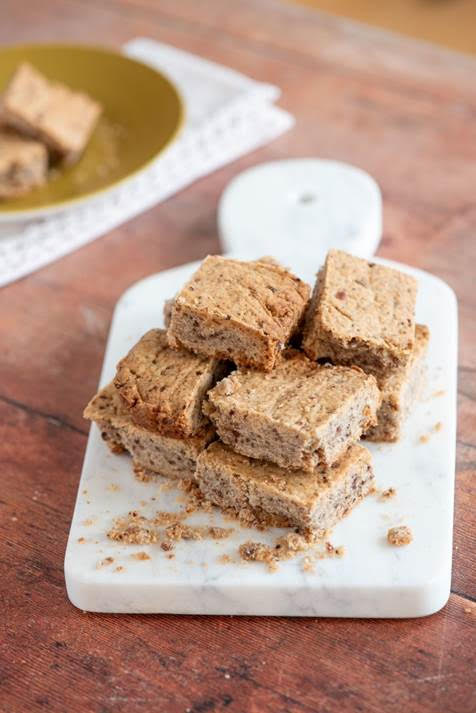
Shortbread is loved by many as a teatime treat – this version is high in fibre, low in sugar and melts in the mouth like a brownie or blondie – hence the name! It also freezes very well.
Makes 16 pieces
Ingredients:
- 175g plain white flour
- 175g spelt or wholemeal flour
- 30g walnuts or pecans
- 125g chopped dates
- 150g butter – room temperature
- 75g tahini
- 1 egg white
Method:
- Mix the flours together in a large bowl
- Whizz together the chopped dates and walnuts or pecans (or a mix of both). (It can be helpful to add a little of the flour into this before blending to keep it fine) Add this mix into the bowl above
- Add the butter (softened), tahini and egg white, a pinch of salt and mix together by hand or in a food processor.The mix should form very large crumbs and start to come together as clumps. Add a little milk if it appears dry.
- Pat into a lined baking tray about 24 cms x 16 cms
- Bake at 160 fan for 25-30 mins until evenly golden brown
Optional – you can add some grated dark or white chocolate, but they are delicious on their own too!
With enormous stresses on the NHS we all need to take responsibility for our own health and supporting our immune system is one key way of doing that. Exercise, eat the rainbow and feed your gut to play your part!
Visit www.lwnutrition.co.uk to find more gut healthy recipes.